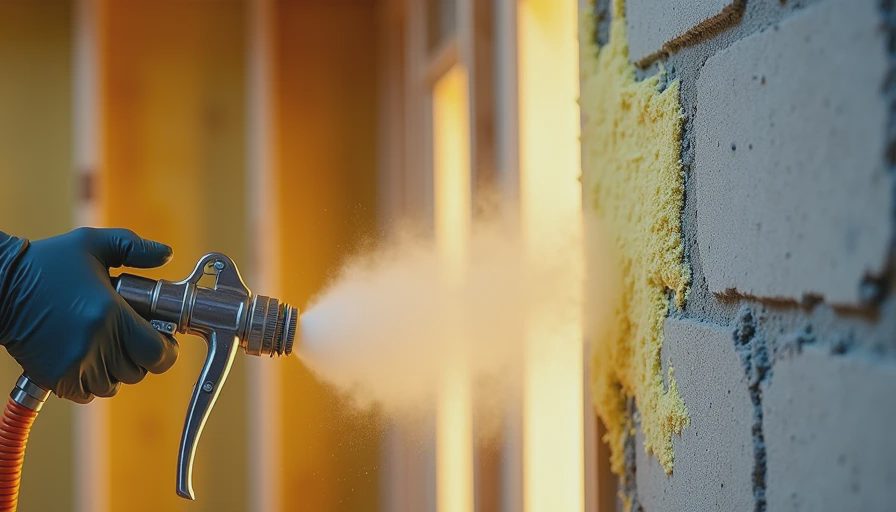
Why Spray Foam Changes Everything in a Basement
Hey, it’s Ben Harlow again. If you’re framing your basement walls and staring at the insulation options, you’ve probably heard the spray foam debate. Some guys swear by it, others call it overpriced fancy stuff. After running crews that sprayed hundreds of basements and fixing plenty of fiberglass disasters, I can tell you: spray foam isn’t magic, but in a basement it’s often the smartest tool in the box.
Today we’re cutting through the noise on closed-cell versus open-cell spray foam. No manufacturer talking points — just what actually works when you’re below grade.
The Big Difference Most Homeowners Miss
Let’s start simple. Both are polyurethane foams, but they behave completely differently once they cure.
Closed-cell spray foam is dense and rigid. It expands less but creates a hard waterproof barrier. Think of it like a tough plastic shell.
Open-cell spray foam is lighter, softer, and expands more. It fills cavities beautifully but acts more like a sponge if moisture gets involved.
In a basement, that difference matters more than anywhere else in the house.
Real-World Performance: What I’ve Seen on Jobs

I remember one job in Fishers, Indiana — 1990s walk-out basement. The homeowner wanted to save money so they went with open-cell everywhere. Looked great the day it was sprayed. Two years later we got called back because of moisture issues along the rim joist. The open-cell had absorbed just enough humidity over time to support some mold growth. We had to rip it out and replace with closed-cell.
On the flip side, I’ve used closed-cell in dozens of flood-prone basements. Even after minor water events, the walls stayed protected. That rigid structure also adds real structural strength to the framing — something fiberglass can’t touch.
R-Value, Moisture, and Air Sealing
Closed-cell typically gives you R-6 to R-7 per inch. Open-cell is around R-3.5 to R-4 per inch. But the real story isn’t just R-value.
Closed-cell is a Class II vapor retarder. It stops moisture movement cold. In a basement where you’re dealing with concrete walls that can wick water, that’s huge. Open-cell is vapor permeable — great for above-grade walls that need to dry, terrible for most below-grade applications.
Both seal air leaks incredibly well, which is why energy bills drop. But only closed-cell also acts as a water barrier.
Cost Breakdown: The Numbers Don’t Lie
Here’s the part everyone wants: real costs from my crews and my own basement project.
Open-cell: Usually $0.80 – $1.40 per board foot installed.
Closed-cell: $1.50 – $2.50 per board foot installed.
For a typical 1,200 sq ft basement with 8-foot walls, you’re looking at roughly:
Open-cell full coverage: $4,500 – $7,000
Closed-cell full coverage: $8,500 – $13,000
That’s a big jump. But here’s where it gets interesting. When you factor in:
No need for additional vapor barriers
Reduced framing requirements (closed-cell can help with some structural support)
Lower long-term moisture remediation risk
Better sound deadening
Higher energy savings
The closed-cell option often pays for itself within 5-7 years in a basement environment. I’ve seen it repeatedly.
My Recommendation for Most Basements
For standard below-grade walls in the Indianapolis area (and most of the Midwest), I almost always recommend closed-cell spray foam on the concrete walls themselves.
Use it from the floor up to the rim joist. Two to three inches gives you excellent performance without eating up too much interior space.
For the ceiling, open-cell can make sense if you want maximum sound control and aren’t worried about moisture from above. But most of my clients go closed-cell throughout for simplicity and performance.
In my own basement right now? Closed-cell on all perimeter walls. Best decision I made.
When Open-Cell Makes Sense
I’m not anti-open-cell. It has its place:
Interior partition walls where you want soundproofing
Above-grade portions of walk-out basements
Budget-constrained projects where moisture risk is truly minimal
Areas where you need maximum expansion to fill weird cavities
Just don’t use it against concrete walls that touch dirt. That’s asking for trouble.
Installation Tips From the Field
If you’re hiring a crew, watch these things:
Make sure they do a proper moisture test on the concrete first.
Require at least 2 inches of closed-cell on exterior walls.
Check for proper coverage at the rim joist — this is where most heat loss happens.
Get the job done in one day if possible. Temperature and humidity control matters.
DIY spray foam kits? I generally don’t recommend them for large areas. The consistency and coverage are hard to get right, and you can’t easily fix mistakes.
Common Myths I Keep Hearing
Myth: “Spray foam will off-gas forever.”
Reality: Modern foams are very low VOC after curing. We’ve had zero issues in finished spaces.
Myth: “Closed-cell is too expensive for my budget.”
Reality: Compare total project cost including future repairs. It’s often cheaper.
Myth: “Open-cell breathes so it’s safer.”
Reality: In a basement, you usually don’t want things breathing moisture from the soil side.
Lessons From My Own Basement
When I started my own project, I was tempted to cheap out on insulation. Three years of watching water behavior taught me otherwise. The closed-cell I installed on the north wall has kept that area bone-dry even during heavy rains. My kids’ future playroom will thank me.
Bottom Line Verdict
For basement walls against concrete: Closed-cell spray foam is worth the extra cost.
For interior walls and ceilings: Open-cell can be a smart money saver.
Don’t guess based on forum opinions. Test your specific basement conditions and make the call with your eyes open.
Spray foam isn’t the only way to insulate a basement, but when done right it solves multiple problems at once — thermal, air, moisture, and even structure. That’s rare in this business.
Got questions about your specific situation? Drop them in the comments. I’ve sprayed enough of this stuff to give you practical answers.
Remember: Above grade is for the real estate photos. Below grade is where you actually live. Do it right the first time.



No letters yet — be the first guest to write.