
Concrete driveway leveling can raise a sunken section without tearing out the whole driveway, provided the slab is reasonably intact and the ground beneath it can support the repair. A contractor pumps material under the concrete to fill voids and lift it gradually. For a driveway that slopes toward your house, though, lifting the slab is only half the job: you also need to stop the water that helped undermine it.
First, figure out why the slab dropped
Start with a straightedge, a tape measure, and a good look after a rain. Note where water collects, where it runs, and whether it disappears through a joint next to the low section. A slab can settle because fill beneath it wasn't compacted well, water washed soil away, or a buried leak softened the ground. Freeze-thaw movement and tree roots can also change the elevation, sometimes by pushing a section up rather than letting it sink.
A useful check is to stretch a string between points that appear stable and measure down to the slab at several spots. Write the measurements down. You're looking for the shape and location of the low area, not proving that the driveway was originally flat. Many driveways have deliberate slopes and transitions.
Look at the garage floor and foundation, too. A gap between the driveway and garage slab may be normal settlement of the exterior concrete. But a driveway dropping alongside new foundation cracks, sticking doors, or signs of soil loss deserves a closer look. A structural engineer or qualified foundation professional can help determine whether the problem extends beyond the driveway.
Don't pump material into a suspected washout and call it fixed. Check downspouts, nearby drains, and plumbing first. If water is still carrying soil away, your newly lifted slab can settle again.

How concrete driveway leveling works
The two common approaches are polyurethane foam lifting and mudjacking, sometimes called slabjacking. Both involve drilling access holes and injecting material beneath the slab. The crew controls the injection in stages, filling accessible voids and raising the concrete toward the desired elevation.
Mudjacking uses a cement-based slurry. Foam lifting uses an expanding polyurethane material. The hole size, equipment, material properties, and return-to-service time depend on the system and contractor. Ask for those details in writing rather than assuming one method always means an instant cure or a permanent fix.
Neither method makes cracked concrete whole again. A crack may close somewhat or become less noticeable after lifting, but it can remain visible and may move again. A slab broken into many small pieces is harder to lift evenly, and badly deteriorated concrete may not be worth lifting at all.
There's also a limit to how far a slab can move without cracking. A careful crew watches the slab and neighboring sections as it rises. The goal is a safe, useful transition and proper drainage, not necessarily a perfectly flush surface at every edge. If a slab is constrained by steps, a garage apron, or another section of concrete, ask what result is realistic before work starts.
What the repair may cost
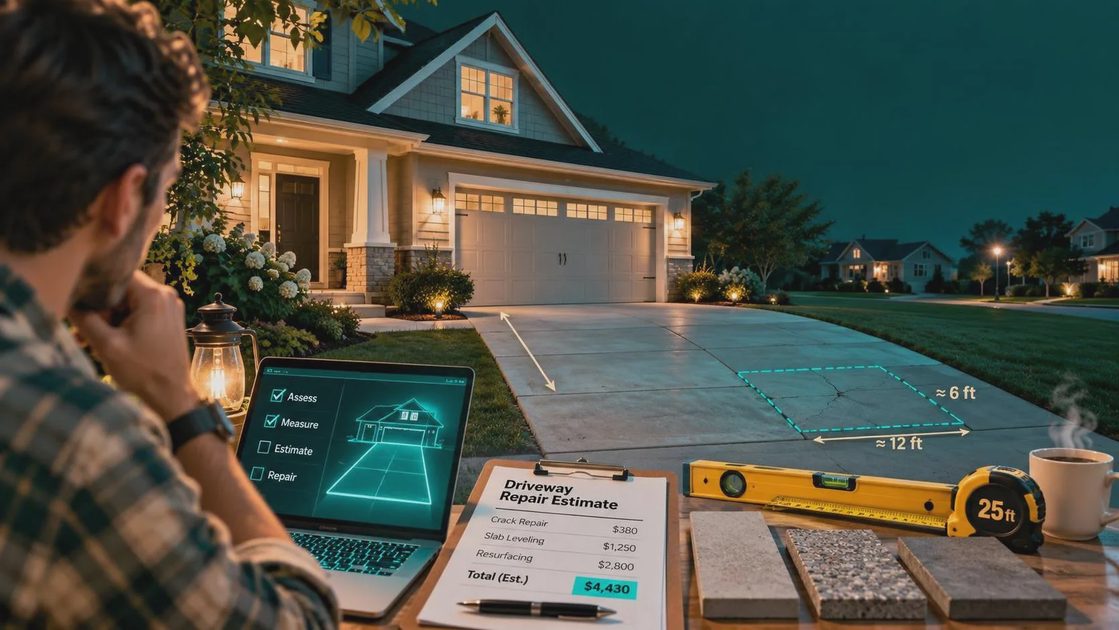
Concrete driveway leveling is commonly priced by the job, not by a simple national rate. As a rough planning figure, a straightforward small-to-midsize repair may run from several hundred dollars to a few thousand; larger lifts, difficult access, extensive voids, and local labor rates can push the price higher. Get at least two written estimates based on the actual slab.
Have each contractor specify which sections will be lifted, the proposed material, how holes will be patched, and whether joint sealing is included. Ask whether the quote covers filling voids beyond the immediate lift area. If drainage work is needed, make sure you know whether it's included or a separate job.
Compare the warranty language, not just the number of years in the sales pitch. Does it cover renewed settlement, cracking during the lift, or only workmanship? Are there exclusions for drainage problems or unstable soil? A warranty won't stop runoff from washing out the base.
When lifting beats replacement
Concrete driveway leveling makes the most sense when the slab is structurally sound, the surface is still serviceable, and settlement has created a lip or drainage problem. Lifting can avoid the demolition, hauling, and curing time that come with a new pour. It can also preserve a driveway whose color and finish you don't want to replace section by section.
Replacement is the better conversation when the concrete is crumbling, heavily spalled, or broken into a patchwork of small pieces. It's also worth considering when the base needs substantial excavation or a buried pipe must be repaired beneath the slab. A contractor may be able to lift one sound panel and replace another; the entire driveway doesn't automatically need to go.
Don't confuse a high panel with a low one. If tree roots or frost have pushed a slab upward, injecting material under the neighboring panel may create new drainage or clearance problems. Identify the cause and the intended finished elevations before choosing a fix.
DIY checks and the water problem
I'd leave the injection itself to an equipped crew. Lifting a heavy slab unevenly can crack it, pinch a joint, or send water toward the garage. Drilling and pumping around buried utilities adds another risk. Your useful DIY work is diagnosing the water path and getting the site ready.
Clean debris out of gutters and check that downspouts discharge away from the problem area without dumping water onto a neighbor's property. Watch where runoff goes during a rain. If you find persistently wet soil, a soft spot, or water appearing when no rain has fallen, investigate a possible buried leak before scheduling the lift.
After concrete driveway leveling, maintain the joints and drainage plan the contractor specifies. Sealant can help limit water entering a suitable joint, but it isn't a substitute for directing surface water away from the house. Check the repaired area after the first few storms and measure again if a lip returns.
Bottom line: lift a sound, sunken slab when the soil and drainage problems can be corrected. Replace concrete that's falling apart, and investigate persistent washouts before spending money on either repair.


No letters yet — be the first guest to write.