
A sinking porch usually means the soil or support underneath it has moved, not that the surface needs a fresh coat of concrete. First, figure out whether you have a concrete slab, a framed porch on posts, or a roof-bearing structure. Then check for active movement and water problems before choosing a repair. A settled walkway slab and a porch pulling a roof away from the house are not the same Saturday project.
Start with safety, then identify the structure
Stay off the porch and keep others away if a post is leaning, a roof is sagging, framing is separating, or the structure is moving noticeably. Use another entrance and arrange a prompt assessment by a qualified structural professional. If collapse appears imminent, contact local emergency services. Don't crawl underneath or try to jack up a roof yourself.
For a stable-looking porch, take a good look from safe, accessible ground. A slab-on-grade porch is concrete resting on the soil. A framed porch has joists and decking supported by posts, beams, or a foundation. Some porches combine a concrete floor with posts that carry a roof. That distinction matters: lifting a slab does not necessarily repair the footings supporting its roof.
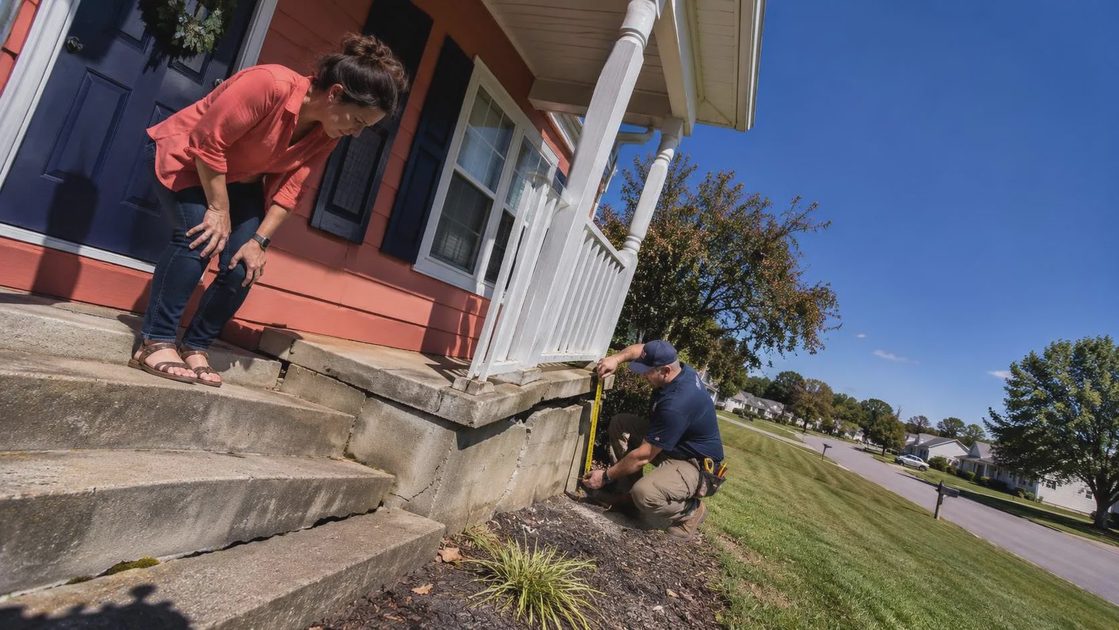
Look where the porch meets the house. A widening gap, displaced flashing, cracked masonry, or a door that has started binding can help show where movement is occurring. A small gap alone doesn't tell you whether the porch, the house, or both have moved.
What causes a sinking porch?
Water is the first suspect I investigate. A downspout dumping beside the porch can soften soil or wash fine material out from underneath. Poorly compacted fill is another common problem, especially where soil was placed back against the foundation after construction. That fill can settle unevenly for years.
Frost can also move shallow supports in cold climates. A footing that rises and falls with freezing soil may leave posts out of alignment. Tree roots, buried organic material, leaking underground pipes, and erosion can contribute too. The visible low spot is a clue, not a diagnosis.
For a framed sinking porch, inspect visible posts and the ends of joists for decay. A screwdriver pressed into exposed wood can help identify a soft, deteriorated area, but don't assume firm-looking wood is sound all the way through. Also check whether posts bear on substantial footings rather than small blocks sitting on the ground. Don't dig around a loaded footing to find out; removing supporting soil can make things worse.
Measure movement before paying for a fix
Photograph the porch from the same locations every few weeks, including a ruler in pictures of accessible gaps and cracks. Note the date and whether conditions were wet, dry, or freezing. Mark the ends of an accessible crack lightly with pencil and date the marks so you can see whether it grows.
A four-foot level can show which way a slab slopes, but an outward slope is often intentional to drain rain away from the house. You're looking for changes, abrupt dips, or a slope that now directs water toward the foundation. Measure any gap at the house in the same spots each time; don't rely on a photo taken from a different angle.
Take a walk around the basement too. New diagonal cracks, water entering near the porch, or a noticeable change in an existing foundation crack deserve attention. The porch may be settling independently, but don't assume it is if the house shows movement as well.
These observations help a contractor or engineer understand the history. They don't prove that a structure is safe, and rapid change is not something to monitor for another month before calling.
Match the repair to the support problem
For a sinking porch made of an otherwise sound, non-load-bearing concrete slab, a lifting contractor may be able to raise it by pumping material underneath. Common approaches include cement-based slab jacking and expanding polyurethane foam. Both depend on access, slab condition, and the reason the ground settled. Ask how the contractor will handle voids and whether the proposed lift could affect steps, railings, or the connection to the house.
Lifting isn't a cure for a broken drainpipe or ongoing erosion. Fix the water source first or as part of the same project. A badly cracked slab may need replacement instead, with the base properly prepared and compacted. Replacing concrete without addressing a washout is a good way to buy the same repair twice.
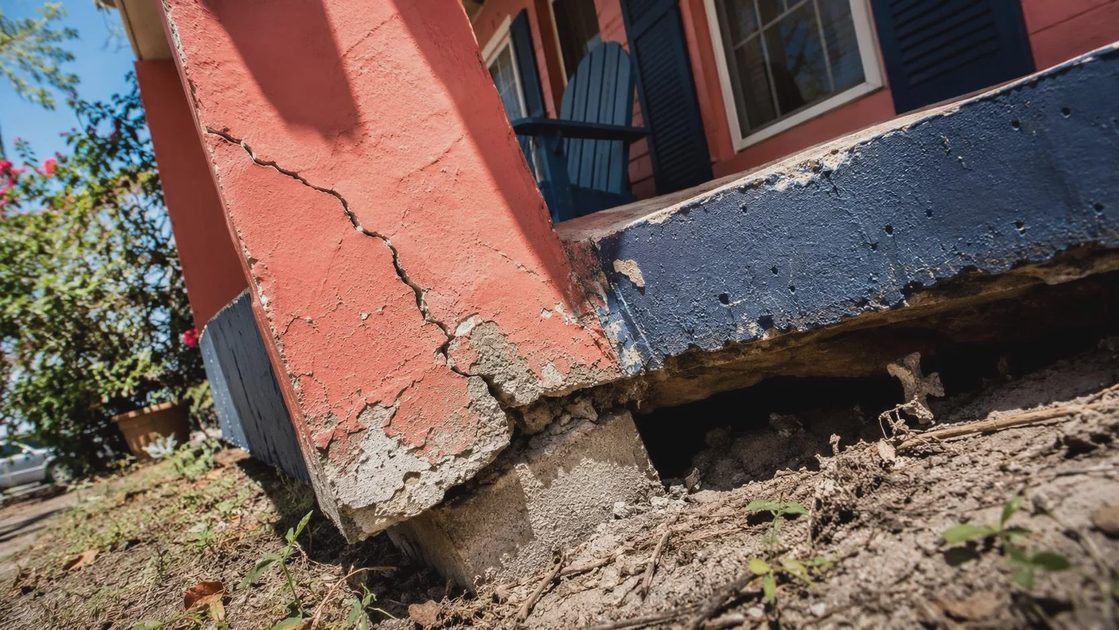
A framed porch with inadequate or failed footings needs a different plan. Depending on the structure and local soil, that might involve temporary shoring, new footings, post replacement, or an engineered pier system. A roof-bearing porch can transfer significant loads; the support and lifting sequence should be designed and performed by qualified professionals. Pulling a post out and slipping a block underneath is not a repair.
If the house foundation is moving too, ask an independent structural engineer to evaluate the cause and repair scope. That can help you compare bids for underpinning or other major work on the same terms.
Fix drainage without trapping water at the house
Extend downspouts so they discharge well away from the foundation where water can drain safely; don't send it onto a neighbor's property or toward another part of your foundation. Clean gutters and check for leaks during rain. Look for low spots beside the porch where runoff collects.
When regrading, maintain clearance below siding and keep soil below weep holes in brick veneer. Don't pile dirt against wood, cover vents, or create a dam against the porch. Local conditions and codes govern the details, so check before changing drainage or connecting downspouts to a buried system.
What to ask before signing a repair contract
Get a written description of the suspected cause, the proposed repair, and what is excluded. Ask whether the price includes drainage corrections, permits, engineering, cleanup, and restoration of steps or landscaping. Confirm who is responsible if concealed damage turns up after work begins. Permit and inspection requirements vary by location and the extent of structural work.
A sinking porch is worth fixing, but the cheapest lift isn't a bargain if the soil keeps washing away. Document what you can safely see, deal with the water, and match the repair to what actually supports the porch.



No letters yet — be the first guest to write.