
Residential foundation repair starts with figuring out whether the foundation is moving, leaking, or both. A thin vertical crack in poured concrete may need monitoring or leak sealing, not an expensive structural overhaul. A bowing wall, a widening crack, or a floor that has suddenly dropped is a different conversation: get an independent structural engineer involved before you frame over it.
Read the signs before buying a repair
Start outside. Walk the perimeter and look for changes in the foundation line, gaps around windows, and soil that slopes toward the house. Inside, use a flashlight along each exposed wall. Note cracks in the concrete or mortar, water stains, white mineral deposits, and any wall that appears to lean inward. Check upper floors for newly sticking doors or windows, too.
No single symptom tells you exactly what's wrong. Doors can stick because of humidity; concrete can crack as it cures. The pattern matters: a crack that is getting wider alongside a newly uneven floor deserves more attention than a stable hairline crack by itself.
Horizontal cracks and inward bowing in a basement wall can point to pressure from soil or water outside. Stair-step cracks in masonry can have several causes, including movement. Don't assume a crack is harmless just because someone has painted over it, and don't assume every crack means the house is sinking.
For residential foundation repair decisions, take clear photos with a ruler in the frame and record the date and location. Measure at the same points each time. A simple crack-monitoring gauge can make changes easier to see, but measurements are not a substitute for an assessment when a wall is bowing or damage is progressing.

If a wall is visibly moving, part of it has failed, or the floor above suddenly drops, keep people away from the affected area and seek urgent professional help. If collapse seems imminent, leave the house and contact local emergency services. Don't excavate beside the wall or try to brace it yourself; either move can make an unstable situation worse.
Match residential foundation repair to the cause
A leaking, nonstructural crack in poured concrete may be treated with an appropriate injection system. The material and method depend on the crack and whether it is actively leaking. Injection can stop a particular leak; it does not correct a bowing wall, stabilize a settling footing, or solve every source of water outside.
A wall displaced by soil pressure may need engineered reinforcement, such as steel supports or anchors. The right approach depends on the wall's condition, available space, soil, and the engineer's design. Some systems stabilize a wall where it stands rather than returning it to its original position. Ask which outcome the proposal actually promises.
Settlement can call for underpinning, often using piers to transfer loads to more suitable support. That is a major structural job, not a cosmetic crack repair. The number, placement, and type of supports depend on loads and site conditions; a salesperson cannot establish the right scope from a quick look at one drywall crack.
Block foundations deserve particular care. Water can collect in hollow masonry cores, and a leaking joint is not necessarily fixed by coating the interior face. A repair plan should explain both the structural condition of the wall and where collected water will go.
Fix the water that loads the wall
Even a sound structural repair can leave you with a wet basement. Before finishing, check whether gutters are clear, downspouts discharge away from the foundation, and the ground carries surface water away rather than collecting it against the wall. Extend downspouts where practical without sending water onto a neighbor's property or creating an icy walkway.
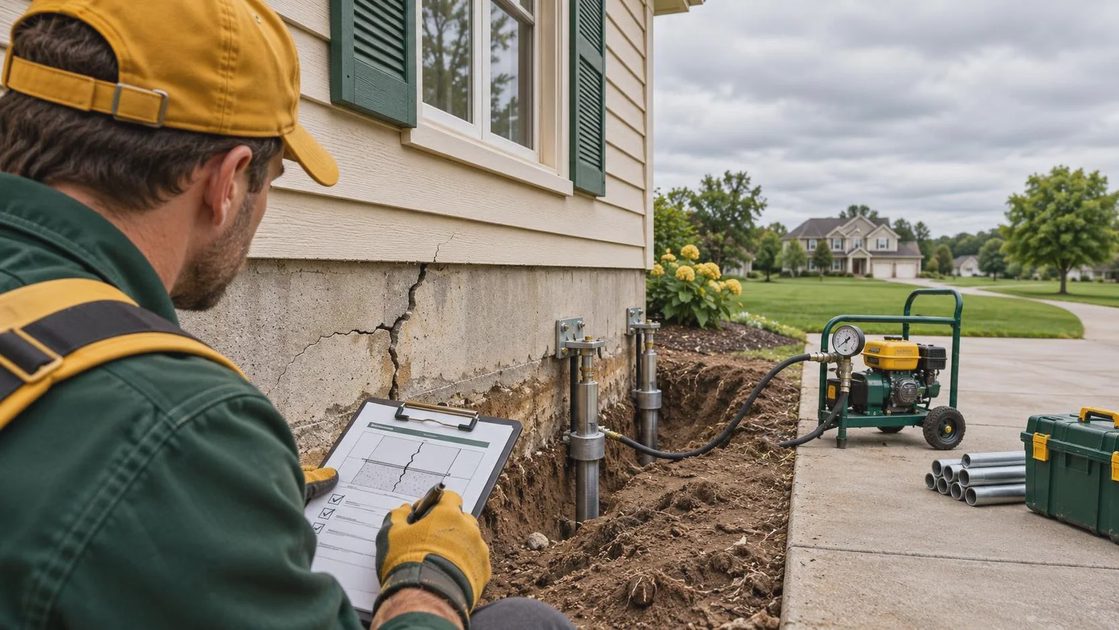
These steps are not a replacement for engineered residential foundation repair. They can, however, reduce the water reaching the foundation. If water still enters after surface drainage is addressed, the next step may be an interior drain and sump system or exterior drainage work. An interior system manages water that reaches it; it does not waterproof the outside of the wall.
Check the sump, if you have one, for a working pump and an unobstructed discharge. A backup power or pump arrangement may be worth considering if a pump failure would flood finished space. Don't assume a sump will control water everywhere: its effectiveness depends on the drainage connected to it.
Get a scope you can compare
For suspected structural movement, I would start with an independent structural engineer who works on houses. Ask for a written assessment identifying the likely cause, whether further investigation is needed, and a repair design or recommended scope. An engineer's inspection costs money, but it gives you something more useful than three competing guesses from contractors selling different systems.
When requesting bids for residential foundation repair, give each contractor the same scope. Ask what is included for excavation, debris removal, permits, inspections, interior finishes, landscaping, and cleanup. Confirm whether the engineer must inspect the work and who pays for that visit. Local permit and inspection requirements vary, so check with your building department before work starts.
Read the warranty alongside the contract. Find out what it covers, how long it lasts, whether it transfers to a buyer, and what conditions might exclude a claim. A long warranty is not much comfort if it covers only a small part of the work or requires maintenance you didn't know about.
Costs vary widely with access, soil, engineering, and the extent of damage. A crack injection and a foundation underpinning project are not remotely comparable jobs. Get written estimates for the actual scope rather than budgeting from a national average.
Don't bury the evidence behind drywall
After residential foundation repair, keep the affected area accessible until the engineer or contractor has completed required inspections and you've addressed any remaining water entry. Photograph the finished work and save the design, permit records, invoices, and warranty with your house documents.
Before adding framing and insulation, look for dampness after substantial rain and investigate any new staining. Dry-looking concrete on one sunny afternoon is not proof that the wall will stay dry year-round. Choose a wall assembly suited to your climate and moisture conditions; trapping a wet foundation behind impermeable layers is a good way to buy yourself a demolition project.
My bottom line: document the movement, deal with the water, and get a structural design when the wall or footing needs one. Then finish the basement. Drywall is a lousy diagnostic tool.



No letters yet — be the first guest to write.