If you are staring at a basement slab and thinking about a cleaner floor, vinyl flooring on concrete is usually the right place to start. It handles the cold, it cleans fast, and it does not have the drama of carpet or hardwood when a little moisture sneaks in. But the slab has to earn the right to cover it. If it is damp, wavy, or patched like a bad pothole job, the floor will telegraph every problem and you will be back under there fixing it.
What vinyl flooring on concrete needs before you buy
The first thing I check is moisture, not color. Concrete can look bone dry and still move vapor through it. That is why a plastic-sheet test, a dehumidifier, and a close look at the slab after a heavy rain tell you more than the sales tag does. Tape down a 2-by-2-foot sheet of clear plastic for a day or two. If you see condensation or darkening underneath, you have moisture movement that needs attention before finish work starts.
Small hairline cracks are common in older basements and usually do not scare me. Wider cracks, heaving, or a slab that stays damp at the edge after rain are different animals. Fix the drainage first. Clean gutters, extend downspouts, and make sure water is not dumping next to the foundation. I have seen people spend good money on a floor and then lose the whole job to one wet corner by the sump.
Choosing the right vinyl for a basement slab
For basement use, glue-down LVT, loose-lay products, and click-lock SPC all have a place, but they do not behave the same. Glue-down gives you a lower profile and a very solid feel, which is nice when ceiling height is tight. Click-lock planks are faster to install and easier to replace if a section gets damaged. For vinyl flooring on concrete, I usually lean toward a rigid-core product if the slab is reasonably flat and the manufacturer allows it over concrete with the right vapor layer.
SPC is the safer bet than softer, squishier products when the basement gets temperature swings. It is more dimensionally stable and less likely to feel like a trampoline. WPC is a little warmer underfoot, but it can feel softer and is easier to dent under furniture legs. If you have kids, a home gym corner, or heavy shelving, that matters. I also pay attention to the wear layer: 12 mil is entry-level, 20 mil is where I start feeling comfortable with real traffic.

Prep work that saves you from callbacks
The part that makes or breaks vinyl flooring on concrete is prep. If the slab has paint overspray, drywall mud, thinset ridges, or old adhesive, scrape or grind it off. A six-foot straightedge will tell you more than your eyes will. Most vinyl products want the floor flat within the manufacturer’s tolerance, and that usually means no big humps and no low spots that let the plank bounce.
For small dips, use a patching compound. For broader trouble spots, use a self-leveling underlayment and prime the slab first so it bonds correctly. Do not dump leveler on a dusty slab and hope for the best. I have seen a whole room fail because somebody skipped primer and the leveler released like a bad pancake. Control joints and cracks can often stay in place if they are not moving, but you need to follow the flooring maker’s instructions on fill and isolation.
If the floor is floating, leave the perimeter gap the product asks for. If it is glue-down, dry-fit a few rows first and check your layout so you do not end up with a sliver at the far wall. That little bit of planning saves an ugly finish.
What the install really costs
Most homeowners are trying to balance price against how long they want the floor to last. Material for decent vinyl can run roughly $2 to $6 per square foot, with better rigid-core products landing closer to the middle or top of that range. Add patching compound, primer, adhesive if you go glue-down, and maybe underlayment, and the prep bill can climb another $0.75 to $2 per square foot fast. In a clean, flat basement, that is manageable. In a rough one, prep can cost as much as the floor.
Labor is where the bill swings. A straightforward basement might run $2 to $5 per square foot for installation. A 600-square-foot space could land around $3,000 to $7,000 all-in if the slab behaves and you are not rebuilding half the floor first. If you need moisture mitigation, drainage work, or serious leveling, the number climbs. That is still cheaper than replacing a failed floor in two years.
A real basement example from a dry slab
I did a basement a few winters ago in a 1980s house with a slab that was dry but ugly. The owner wanted a playroom and a small office, and the concrete had old adhesive, a couple of pitted spots, and one low area near the water heater. We spent most of the first day cleaning, grinding, and patching instead of opening boxes of flooring. That is normal. The second day was layout and install.
The floor cost was not the scary part. The prep was. Once the slab was flat, the rigid planks went down clean, the transitions looked right, and the room felt finished instead of temporary. That job is a good example of why the floor choice matters less than the slab underneath it. A cheap floor over a bad slab is still a bad floor.
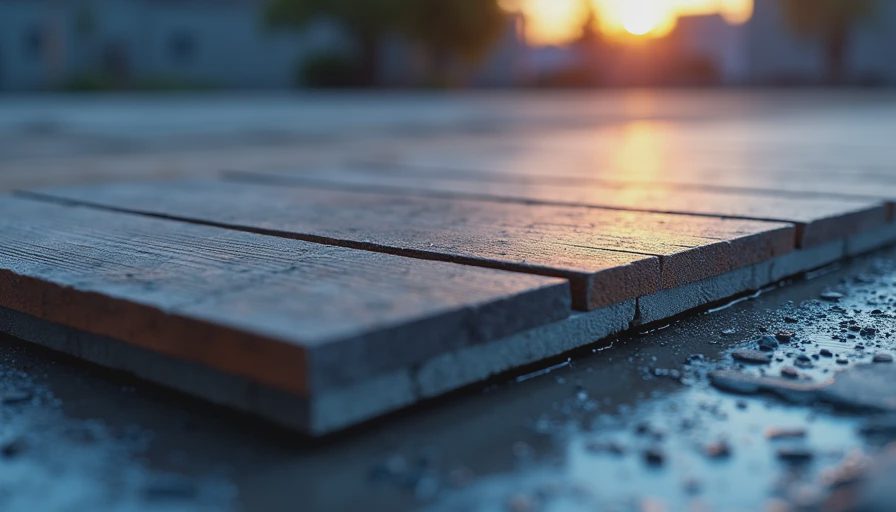
When to stop and fix the slab first
Sometimes the right answer is not a better floor. If you have standing water, recurring damp spots, white powdery efflorescence that keeps coming back, or a crack that has one side higher than the other, stop and deal with the cause. Vinyl will not solve a water problem. It only hides it until the damage is worse and harder to trace.
If the basement smells musty, the slab may not be the only issue. Check humidity, look at the rim joist, and make sure any sump pump actually cycles the way it should. A simple dehumidifier can help a dry basement stay dry, and a decent one often costs a few hundred dollars, not thousands. That is cheap insurance compared with tearing out a finished floor.
There is also a point where the slab is so uneven that leveling becomes a project of its own. If you are correcting more than a few major low spots, or the floor is out by more than the manufacturer allows, you may be better off grinding, patching, and rethinking the layout before you buy a single box of planks.
If you want a basement floor that looks clean, feels solid, and does not panic every time it rains, vinyl flooring on concrete is a smart move when the slab is dry, flat, and properly prepped. Do the boring work first, buy the right product, and do not let a pretty sample cover up a bad slab. Above grade is for the real estate photos. Below grade is where you actually live.



No letters yet — be the first guest to write.