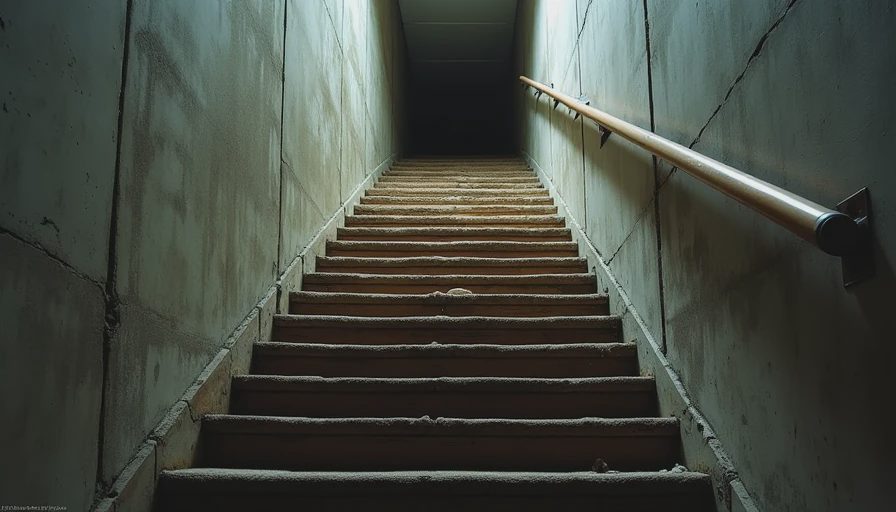
The Stairs Most People Ignore
Hey, Ben Harlow here. You’ve probably walked up and down your basement stairs hundreds of times without thinking twice. But if your house was built before 2000, there’s a good chance those stairs wouldn’t pass inspection today.
After framing and fixing stairs on countless basement projects, I’ve seen the same issues repeatedly. Let’s talk about why your stairs might be illegal and what to do about it.
Common Code Violations in Older Basement Stairs
Here are the biggest problems I encounter in Indiana homes:
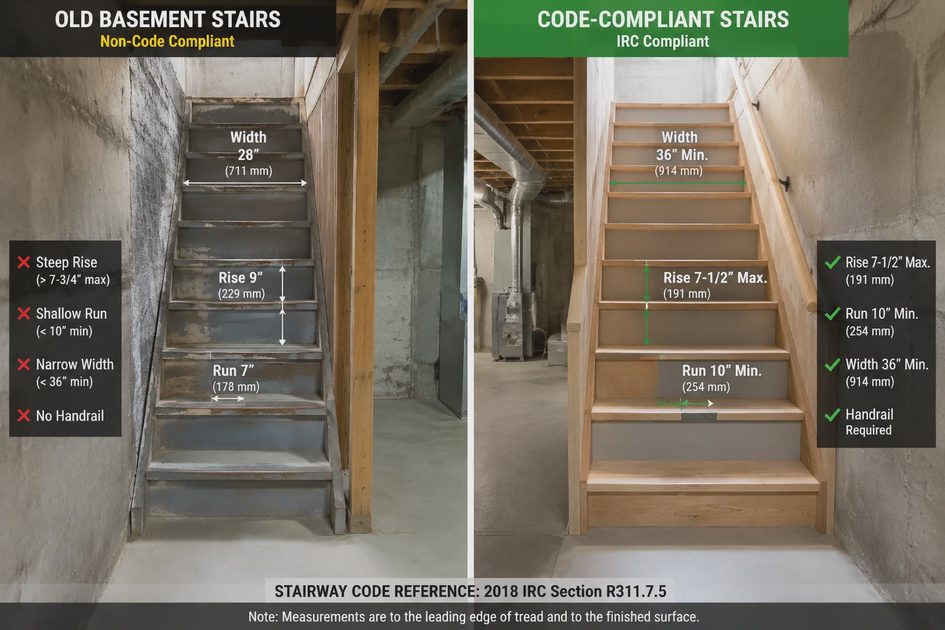
Rise and run dimensions — treads too shallow or risers too tall
Headroom — less than 6 feet 8 inches
Handrails and guardrails missing or wrong height
Landing requirements at top and bottom
Width too narrow for safe passage
Lighting and illumination inadequate
These rules exist for good reason. Basement stairs are often steeper and darker than main house stairs.
The Numbers You Need to Know
Current typical requirements:
Maximum riser height: 7-3/4 inches
Minimum tread depth: 10 inches
Minimum headroom: 6 feet 8 inches
Handrail height: 34-38 inches
Minimum width: 36 inches clear
Your 1990s builder-grade stairs probably miss several of these.
I measured one set of stairs last year that had 8.5-inch risers. No wonder the homeowners felt unsteady carrying laundry.
Fix Options: From Simple to Full Replacement
Option 1: Minor Modifications
Add handrails, improve lighting, add nosing to treads. Sometimes enough to make them safer even if not fully code compliant.
Option 2: Rebuild Within Existing Opening
Modify stringers or add treads/risers to meet dimensions. Often the most practical solution.
Option 3: New Stairwell Location
Completely relocate for better layout and full code compliance. More expensive but gives the best result.
In my own 1998 colonial, the original stairs were marginal. I’m planning a full rebuild as part of the finishing phase to make them safe and comfortable for the kids.
Structural Considerations
When modifying stairs, you must maintain proper support. Cutting stringers weakens them. I always consult load calculations and often add additional framing.
Don’t guess on structural stuff. This isn’t the place to wing it.
Cost Ranges
Basic handrail and lighting upgrades: $300 – $1,200
Rebuild within existing space: $2,500 – $6,000
New stairwell with relocation: $8,000 – $15,000+
Well-built stairs add real safety and value. Cheap fixes often create bigger headaches later.
My Recommendation
If you’re finishing the basement for regular family use, do the stairs right. Safe, code-compliant stairs make the whole space feel more integrated with the rest of the house.
Don’t treat them as an afterthought. Plan them early in your project.
Real-World Lesson
I once had to tell a family with young kids that their basement playroom access stairs were unsafe. We rebuilt them and the difference in confidence (and actual safety) was huge. The kids now run up and down without hesitation.
Bottom Line Verdict
Check your basement stairs against current code. Most older ones fall short. Fix them properly as part of your renovation and you’ll have safer, more usable space for years to come.
If you’re unsure about your specific stairs, take measurements and share them in the comments. I’ll give you my honest assessment of what needs attention.
Above grade is for the real estate photos. Below grade is where you actually live. Make sure you can get there and back safely every single day.

No letters yet — be the first guest to write.