If you're asking can you put vinyl flooring over concrete, the short answer is yes, but only when the slab is dry, flat, and not trying to tell you a water story. I've seen plenty of basements where a good vinyl floor made the space feel finished fast, and I've seen just as many where a homeowner skipped the slab prep and paid for it later. Above grade is for the real estate photos. Below grade is where you actually live.
The good news is that vinyl is one of the more basement-friendly finishes when you pick the right type. Luxury vinyl plank, luxury vinyl tile, and some sheet vinyl products can all work over concrete. The catch is that the floor underneath has to be honest. If the slab has active seepage, big humps, soft spots, or a moisture problem that shows up every summer, the flooring is not the first fix.
When can you put vinyl flooring over concrete?
The safest answer is when the slab is sound, dry enough for the product you picked, and flat enough that the joints do not flex. A basement floor does not need to be museum-level perfect, but it does need to be stable. If you have white powder on the concrete, dark damp patches, a musty smell after rain, or water at the perimeter, stop and solve the source first. Gutters, downspouts, grading, sump work, and exterior drainage are cheaper than replacing a floor twice.
On older homes, I also pay attention to old paint, carpet adhesive, and patchwork repairs. Loose coatings have to come off. If the slab was painted with something that is peeling, the vinyl is only as good as that failing layer. If you are shopping products, check the installation guide before you buy. Some floating floors want a vapor barrier or a specific underlayment, while others do not want anything extra under the planks at all.
Moisture is the part that ruins the job. Concrete can look dry and still move vapor all year. A plastic sheet taped to the floor is a rough clue, not a finish-line test. If you are spending real money, a moisture meter is a decent first pass, and in-slab RH testing or a calcium chloride test tells you more. I am not telling every homeowner to rent lab gear for a weekend, but I am telling you not to trust your eyes alone.
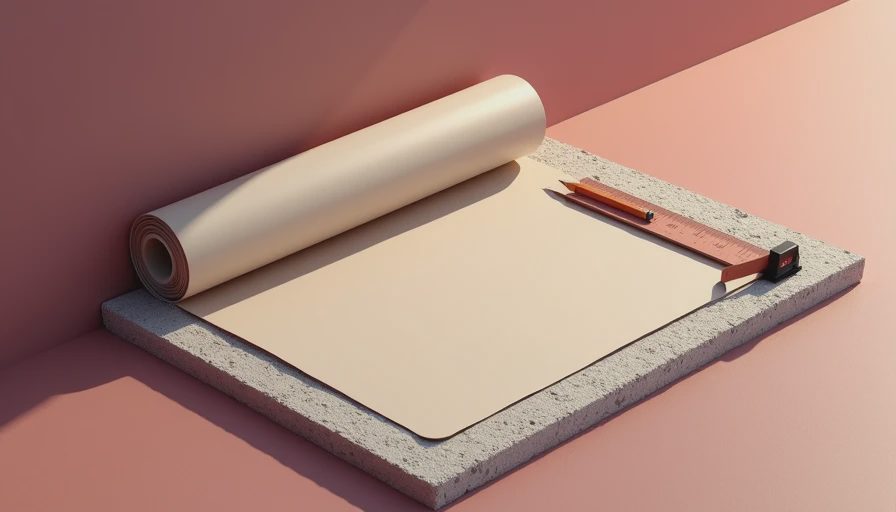
Flatness and crack prep matter more than people think
The floor does not have to be polished, but it does have to be flat within the manufacturer's tolerance. A lot of floating vinyl floors want something like 3/16 inch over 10 feet, and some are even tighter. If the slab has ridges from an old wall, a proud control joint, or a bad patch, the click system can bounce and fail. High spots get ground down. Low spots get filled with a cement patch or self-leveler. That is not glamorous work, but it is what keeps the floor quiet and solid.
Cracks are a different animal. Hairline cracks in a stable slab are common and usually not a problem for vinyl. Wide cracks, heaving cracks, or a joint where one side sits higher than the other deserve a closer look. If the concrete is moving, the floor on top will telegraph that movement. I once walked into a basement where a homeowner laid click-lock over a slab that had a slow, seasonal hump near the wall. By the next humid spell, the seams started to pop and the room had a hollow, crunchy sound underfoot. That repair cost more than the original material bill.
Floating LVP or glue-down: which one makes sense
For most basements, floating luxury vinyl plank is the easiest path. It is forgiving, fast to install, and it handles minor slab imperfections better than glue-down. It also gives you a little cushion if the product has an attached pad. The tradeoff is that it still needs a flat surface and a manufacturer-approved moisture setup. If you are trying to cover a basement playroom, office, or family room, floating vinyl is usually the first thing I price out.
Glue-down vinyl tile or plank makes more sense in some utility spaces, in basements with low clearance, or where you want a thinner floor at stairs and transitions. It can also feel a little more rigid underfoot. But glue-down is less forgiving. If the slab is not prepped right, every ridge and hollow will show through. Material cost for vinyl itself often lands around $2 to $6 per square foot, with prep adding another $1 to $3 depending on how ugly the concrete is. If you hire it out, labor can push the total well above that. A pretty floor is cheap only when the slab is already behaving.
The prep sequence I trust on basement jobs
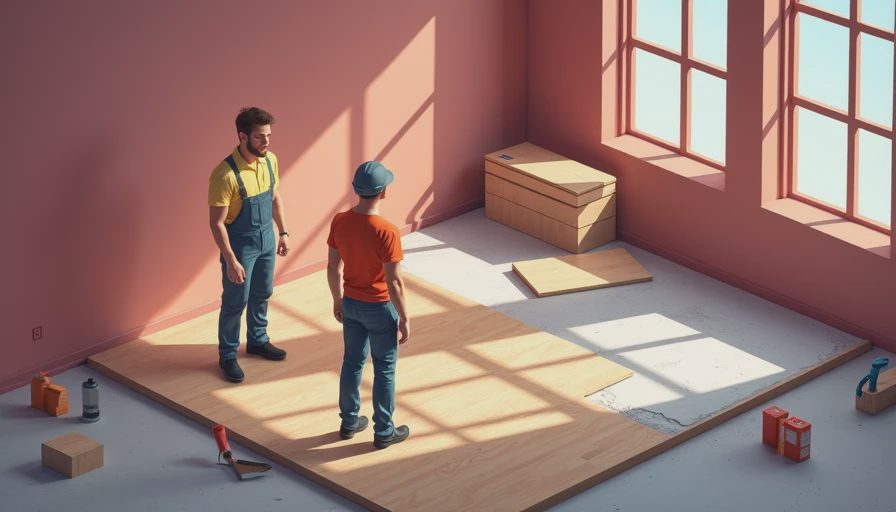
The prep sequence is boring, which is exactly why it works. First I clean the slab until the dust and old grit are gone. Then I scrape off anything loose, patch cracks that need patching, and level the trouble spots. After that I check the floor again with a long straightedge, because your eye will lie to you once the room starts getting finished. If the product allows underlayment, I use the one the manufacturer calls for and nothing random from the shelf.
I also like to run a dehumidifier in the basement for a day or two before installation, especially in July and August. That does not fix a wet slab, but it does help control the room while the floor acclimates. Keep the expansion gap the product requires, usually around 1/4 inch at the perimeter, and do not trap the flooring under fixed trim or heavy built-ins unless the instructions say you can. If you are unsure about one detail, read the box and the spec sheet before you open the cartons. That is a lot cheaper than guessing.
Bottom line for homeowners
So, can you put vinyl flooring over concrete? Yes, if the slab is dry, flat, and stable enough for the product you buy. That is the whole game. If you see active leaks, white efflorescence, a damp smell, or a slab that is out of level in a way you can feel, spend your money on drainage and prep before you spend it on planks.
If the concrete is decent, vinyl is a smart basement finish because it gives you the wood look without the wood problems. Just do not let a pretty sample board talk you into skipping the hard part. Buy the right material, fix the slab, and install it by the book. That is how you get a floor that still looks good when the furnace is replaced, the kids are older, and the basement is finally the room everybody uses. Do this. Don't do that. Above grade is for the real estate photos. Below grade is where you actually live.


No letters yet — be the first guest to write.