If you're finishing a basement and searching for where to buy vinyl faced insulation, you're already on the right track. Vinyl faced fiberglass batts are the right product for below-grade walls: they hang flat, they give you a built-in vapor retarder, and they don't peel like kraft facing when the concrete behind them sweats. I've installed miles of this stuff over a decade of basement finishing. Here's where to get the best price, and what to avoid.
Start With the Big Box Stores
Home Depot, Lowe's, and Menards all carry vinyl faced insulation in the standard sizes for basement framing: R-13 for 2x4 walls and R-19 for 2x6 walls, in both 16-inch and 24-inch widths. Around Indianapolis, I've bought Owens Corning and CertainTeed vinyl faced batts at Home Depot for roughly $50 to $60 a bundle. A bundle covers about 88 square feet, so you're looking at 57 to 68 cents per square foot. Not a bad price.
The problem is inventory. A big box store might have two bundles in stock, and your wall needs twelve. You'll be special ordering or hitting three stores. Buy one bundle here to check the facing quality, then plan on ordering the rest.
Call Your Local Lumberyard Before You Order Online
The place most homeowners forget about is their local lumberyard. Not the massive warehouse, but the place where contractors buy their studs and drywall. Places like 84 Lumber, Carter Lumber, or the family-owned yard down the road stock vinyl faced insulation from brands like Johns Manville, and they can sell to anyone walking in off the street. You're not a contractor, but buying a full bundle or more makes you worth their time.
The price is usually a little better than the big box store, often $45 to $55 per bundle. More important, they can guarantee the whole order is the same lot number, which matters if you care about consistent R-value and clean flanges. Call first, tell them how many square feet you need, and ask if they have it in stock. If they don't, they can have it by the next morning. If you're still asking where to buy vinyl faced insulation, the lumberyard is your answer.
Insulation Distributors Are the Contractor's Secret
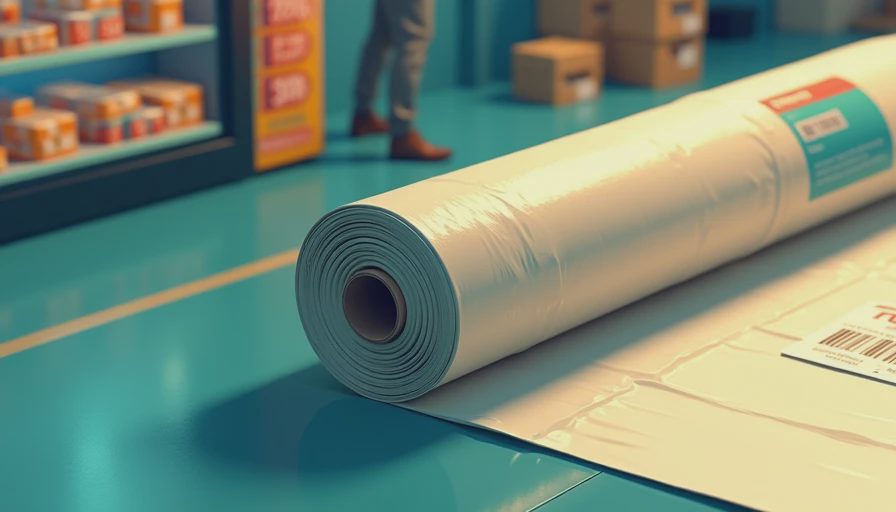
If your project is an entire basement, stop thinking about retail and start calling an insulation distributor. ABC Supply, Allied Building Products, and regional players like Cameron Ashley or SRS Distribution operate in most metro areas. These are wholesale yards that feed the pros, but many will take cash or card sales from a homeowner who walks in with a truck and a full order. You just need to ask. Some have a $100 or $200 minimum, which you'll hit with five bundles of R-13 anyway.
Here's what makes distributors better: selection and price. You can get commercial-grade vinyl faced batts with foil-reinforced facings, fire-rated facings, or a wider range of R-values. Prices at a distributor will often undercut the big box stores by 10 to 20 percent. I'll be honest, the staff at a distributor aren't there to teach you how to insulate a wall. Know what you need before you walk in. Bring your wall height, stud spacing, and R-value, and they'll sell you the right bundles.
Online Retailers Only for Odd Sizes
Amazon, Home Depot's website, and specialized shops like Insulation4Less will ship vinyl faced insulation to your door. That can be handy for odd sizes like R-15 for 2x4 walls or custom widths. But shipping kills the deal. A single bundle of fiberglass batts weighs around 20 pounds and takes up a lot of cubic space. Carriers charge oversize fees, so the per-square-foot cost jumps to 80 cents or more. I'd only go this route if you need less than a bundle, can't find the right R-value locally, or you're buying some odd width for a specific cavity. Otherwise, wait a day for the local supplier.

What to Look For Before You Hand Over Money
Not all vinyl faced insulation is the same. First, check the facing. A true vinyl facing has a slight sheen and a smooth surface. It should be bonded to the fiberglass, not just glued at the edges. If you run your hand over it, it should feel like a sheet of plastic, not paper. The flanges, the flaps used to staple to the studs, should be at least one inch wide. Anything narrower is a pain to staple without tearing.
Second, confirm the R-value is stamped on the face. For basement walls in most climates, you want R-13 to R-15 in a 2x4 wall and R-19 in a 2x6 wall. Those are the standards. Third, check the dimensions match your stud layout. A 16-inch-wide batt is for studs on 16-inch centers; a 24-inch batt is for 24-inch centers. Using the wrong width leaves gaps that kill the R-value.
One thing to remember: the vinyl facing is your vapor retarder, but it is not a fire block. Most building codes still require drywall or another thermal barrier over the insulation in a finished basement. Don't skip that step.
Bottom Line
If you're doing a single wall or a few spots, run to Home Depot or Lowe's and pay $50 to $60 a bundle. If you're insulating a whole basement, call a local lumberyard or an insulation distributor and save 10 to 20 percent. Expect to pay $45 to $55 per bundle when buying five or more. Online is only for oddball sizes. No matter where you buy, check the facing, the R-value, and make sure it's true vinyl faced before you load it in the truck.
So, if someone asks you where to buy vinyl faced insulation, the answer is: start local, compare the big box price with the lumberyard, and don't be afraid to walk into a distributor. Do that, and you'll hang that insulation once and never have to do it again.


No letters yet — be the first guest to write.